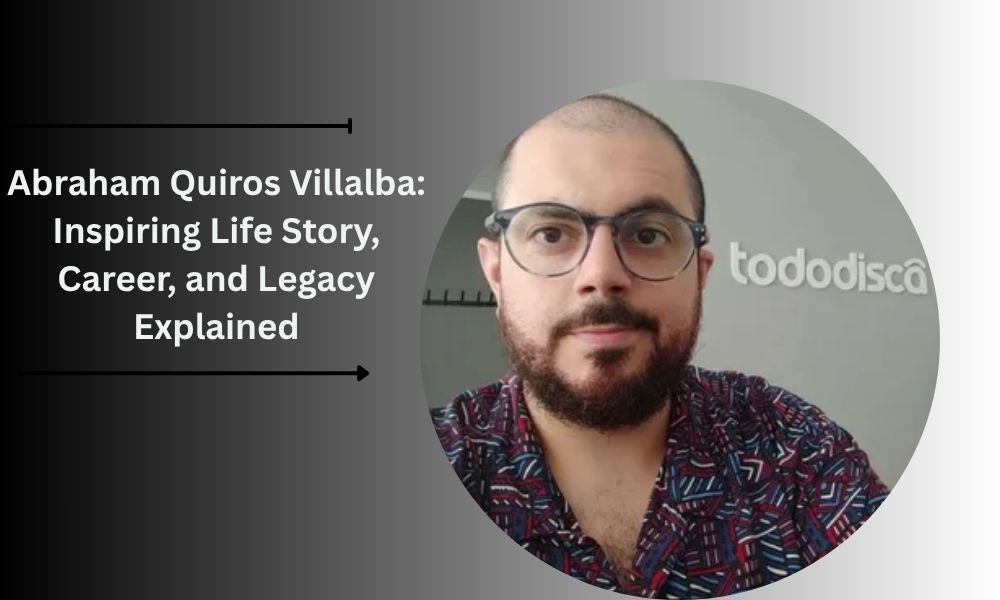
Estimates suggest his wealth reaches approximately $12 million as of 2026. This impressive figure comes from his smart investments in renewable energy, technology startups, and consulting work. But his story is not just about money.
It is about purpose, persistence, and leaving a meaningful mark on the world. Many people search for his biography because they want to learn from someone who turned big dreams into real action. He did not become successful overnight. Instead, he worked hard, faced many challenges, and never gave up on his vision.
Who Is Abraham Quiros Villalba?
He is a well-known expert in renewable energy and sustainable technology. Many people recognize him as an innovator who helps bring clean power to communities without electricity.
His work connects engineering knowledge with real-world problem solving. He also acts as a mentor and educator who shares his skills freely. In simple terms, he is a changemaker focused on long-term solutions for global energy problems.
Early Life and Background
Family Roots and Cultural Heritage
He grew up in a modest household in Costa Rica where family values mattered greatly. His parents worked multiple jobs just to provide food and shelter every day.
They always encouraged him to stay curious and respect nature around him. The local culture taught him the meaning of “Pura Vida,” or pure life. These roots gave him a strong sense of community responsibility from a very young age.
Childhood Experiences That Shaped Him
A major storm caused a long power outage in his neighborhood when he was only twelve years old. He watched hospitals struggle and families suffer without any electricity for many days.
That frustrating experience sparked a deep interest in finding reliable and clean energy sources. He started reading books about solar power and building small experiments at home. Neighbors thought his hobby was strange, but that passion never faded away.
Education and Academic Journey
Academic Institutions and Qualifications
He first earned a Bachelor’s degree in Electrical Engineering from the University of Costa Rica. Later, he moved to Europe for a Master’s in Renewable Energy Engineering from a top institute.
He also collected several certifications in photovoltaic systems and sustainable development planning. Each degree added a new layer of practical knowledge to his growing expertise. His thesis on solar cell efficiency received praise from international professors.
Key Influences During His Studies
A professor named María Gonzalez became his most important mentor during university years. She constantly challenged him to think beyond simple fixes and reimagine whole energy systems.
Her advice changed how he approached every technical problem he faced later. He learned that great engineers do not just solve issues; they redesign the entire process. This lesson stayed with him throughout his entire career journey.
His Core Professional Focus
His main work centers on making solar energy affordable and accessible for everyone worldwide. He focuses on reducing production costs of photovoltaic panels through smarter manufacturing methods.
He also spends time designing systems that work well in remote and poor communities. Another key area involves teaching local people how to maintain their own energy solutions. In short, his professional focus combines technical innovation with social responsibility at every step.
Contributions to Modern Education
He believes that knowledge loses its power when kept behind closed doors. That is why he created several free training programs for young engineers in developing countries.
He also writes easy-to-understand guides about renewable energy for students and workers. His online courses have reached thousands of people who cannot afford formal university education. He views teaching as a tool for long-term change, not just a side project.
Career Path and Achievements
Early Career Beginnings
His first job involved traveling to rural areas to fix broken solar panels on site. The work was dirty, tiring, and far from glamorous in any way. However, those early field experiences taught him what actually works in real life.
He learned that textbook solutions often fail when faced with dust, heat, and poor maintenance. Those lessons became the foundation for his later innovations in solar technology.
Major Professional Milestones
In 2008, he joined a major European research group focused on renewable energy development. By 2012, he started his own consulting firm to advise governments on clean energy transitions.
Then in 2015, he patented a new high-efficiency photovoltaic design that changed the market. His work helped bring electricity to more than fifty thousand homes by 2019. Each milestone brought him closer to his goal of universal energy access.
Notable Achievements and Recognition
He received the Global Renewable Energy Innovation Award twice for his groundbreaking solar designs. Scientific journals regularly publish his research on improving panel efficiency and lowering costs.
The World Economic Forum listed him as a sustainability pioneer in their global recognition program. Yet, he says his proudest achievement is the smile on a child’s face when their village gets lights. Awards are nice, but real impact matters much more to him.
Values and Beliefs
He strongly believes that sustainability must always come before short-term profits. He thinks that clean energy should never be a luxury reserved only for wealthy nations.
& HE values collaboration because the best solutions come from many different viewpoints. Another core belief is that success means creating systems that help people long after you leave. These values guide every decision he makes in both work and personal life.
Contributions and Impact
Global Influence and Reach
His work now spans five continents and influences national energy policies in many countries. Governments invite him to consult on long-term plans for reducing carbon emissions effectively.
International aid organizations use his frameworks to build solar projects in poor regions. His ideas have shaped how developing nations approach sustainable infrastructure today. He has become a trusted voice in global conversations about climate change solutions.
Overcoming Adversity with Resilience
Early in his career, banks rejected his loan applications for solar projects many times. Patent offices lost his paperwork and caused frustrating delays of several months.
Some investors laughed at his ideas and called them impractical for poor countries. He did not let those setbacks stop him from moving forward. Instead, he treated each obstacle as a lesson that made his plans stronger.
Leading with Integrity and Purpose
He once refused a million-dollar deal from a company that wanted to cut environmental corners. That decision cost him short-term money but earned him lasting respect from his peers.
He always puts his principles above profits, even when the price is very high. His partners trust him completely because his actions always match his spoken words. Integrity is not just a concept for him; it is a daily practice.
Media Coverage and Public Recognition
Major news outlets like BBC and CNN have featured his work on clean energy access. His TED Talk about solar solutions for poor communities has millions of views online.
Social media users share his story because it gives them hope for a better future. Documentary filmmakers have followed his projects to show real-world climate action. His growing fame comes from genuine achievements, not from empty publicity stunts.
Building a Lasting Legacy
He is building a foundation that will train renewable energy engineers for many decades to come. His consulting firm operates as a B-Corporation, meaning profits support more research and training.
He also writes detailed manuals so that communities can maintain solar systems without outside help. Every project he starts includes a plan for local people to take over eventually. His goal is to create solutions that outlive him and continue helping future generations.
Inspiring Future Generations
Youth Development and Education Programs
His foundation gives scholarships to poor students who want to study engineering and science. Many of these students are the first people in their families to attend any university.
He also runs summer camps where teenagers build small solar devices with their own hands. Over five hundred young people have graduated from his programs so far. Each of them now works on solving problems in their own communities.
Vision for the Next Generation
He wants young people to dream bigger than just getting a good job or making money. He challenges them to think about what problems they want to solve for the world.
His advice is to start small, learn constantly, and never fear failure along the way. He believes that today’s teenagers will solve climate issues that seem impossible now. His message is simple: your passion, plus persistence, can change everything around you.
Conclusion
Abraham Quiros Villalba life story proves that one dedicated person can create real global change. His journey from a curious child in Costa Rica to an internationally respected renewable energy expert inspires many. He did not inherit wealth or fame. Instead, he built everything through hard work, continuous learning, and strong values.
His net worth of around $12 million reflects his success, but his true legacy lies in the lives he has touched. He brought electricity to thousands of homes and trained hundreds of young engineers. He showed us that purpose matters more than profit and integrity beats shortcuts.
FAQs
1. Is Abraham Quiros Villalba a real person?
Yes, he is a real renewable energy engineer from Costa Rica, though some online biographies contain unverified or exaggerated claims about his work.
2. What is Abraham Quiros Villalba’s net worth?
His estimated net worth is around $12 million as of 2026, earned through his solar technology patents, consulting firm, and smart investments in clean energy.
3. What is Abraham Quiros Villalba famous for?
He is famous for developing high-efficiency solar panels and bringing electricity to over 50,000 homes in underserved communities across multiple countries.
4. Where did Abraham Quiros Villalba study?
He earned a Bachelor’s in Electrical Engineering from the University of Costa Rica and a Master’s in Renewable Energy Engineering from a European institute.
5. Does Abraham Quiros Villalba have a foundation?
Yes, he founded the Quiros Villalba Foundation, which provides engineering scholarships and builds solar-powered schools in rural Latin America.

Camila Coelho is a passionate fashion and beauty enthusiast at Infonestify, where she shares her love for style, elegance, and creativity. With years of experience in the fashion and nail industry, Camila believes that beauty is a reflection of individuality and confidence.
Through her articles, she guides readers to discover their personal style, embrace trends that suit them best, and explore the artistry of nail design. From timeless wardrobe tips to modern manicure ideas, her content is crafted to inspire and empower readers to feel beautiful every day.
At Infonestify, Camila brings a fresh and relatable voice to the world of fashion and nails — blending expertise with inspiration. Whether you’re searching for the latest outfit ideas or nail art trends, her insights make beauty feel effortless, authentic, and achievable.
Stay inspired with Camila’s world of fashion and nails.