
Visualizing dimensions without a ruler can be surprisingly difficult, yet understanding the scale of two inches is a helpful skill for DIY projects, crafting, and general spatial awareness. While many objects vary slightly in manufacturing, there are several everyday items that consistently hit this specific measurement. By identifying these common benchmarks, you can quickly gauge the size of an object or space without needing to reach for a tape measure.
The Standard Paperclip as a Baseline
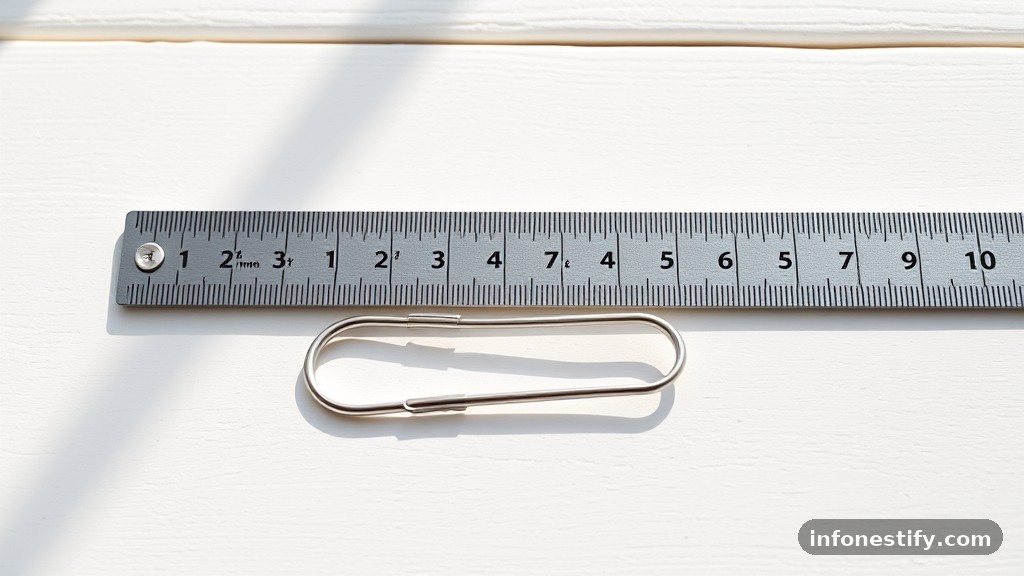
When discussing objects that measure exactly two inches, the classic large-sized paperclip is perhaps the most ubiquitous reference point. While standard small clips are significantly shorter, the “jumbo” or “large” office variety is manufactured to be almost exactly two inches in length. This makes them an excellent tool for quick, on-the-fly measurements in an office setting.
If you are trying to estimate the length of a small screw, a piece of wire, or a gap in a piece of furniture, holding a jumbo paperclip next to it provides an immediate visual confirmation. Because these clips are produced by the millions using standardized industrial molds, their size is remarkably consistent across different brands.
It is important to note that you should specifically look for the “large” designation, as the standard small paperclip usually measures closer to one inch. By keeping a few of these in a desk drawer, you have a reliable, rigid, and accessible measurement tool that fits perfectly into the two-inch category.
The Height of a Standard AA Battery
Many people are surprised to learn that a standard AA battery stands exactly two inches tall. When you hold an AA battery in your hand, you are holding a physical representation of this specific length. This is incredibly useful for homeowners and gadget enthusiasts who need to check clearances for battery compartments or small electronic housings.
The consistency of the AA battery size is strictly regulated by the American National Standards Institute, which ensures that batteries from various manufacturers fit into the same electronic devices globally. Because of this, the two-inch height is a reliable constant.
Whether you are checking if a small storage box can fit a specific item or trying to visualize how much space a decorative light fixture might occupy, the AA battery serves as a perfect, solid reference object. Its cylindrical shape and standardized length make it one of the most reliable “living” rulers you likely have lying around your junk drawer.
Two US Quarters Placed Side-by-Side
If you find yourself without a ruler or a battery, your loose change can be a surprisingly accurate way to measure length. A United States quarter has a diameter of approximately 0.955 inches. When you place two of these coins edge-to-edge, the total distance across the pair is just slightly over 1.9 inches. For all practical, non-scientific purposes, this is essentially two inches.
Using coins as a measurement tool is a classic trick for when you are out in the field and need to make a quick estimation of a hole diameter or the width of a small object. While the slight discrepancy exists, the error margin is less than a tenth of an inch, which is usually negligible for everyday tasks like measuring the depth of a shelf or the size of a fastener. This method relies on the precision of federal minting processes, which ensure that circulating currency remains uniform in size regardless of the year they were produced.
See More: How Tall is 40 Inches? Example with 12 Common Things | 40 Inches Big
The Standard School Eraser
Pink, rectangular school erasers, often referred to as “wedge” or “block” erasers, are another iconic item that typically measures two inches in length. While there are various sizes available, the classic block eraser—the kind that leaves behind those familiar rubber shavings—is frequently manufactured to be two inches long by one inch wide. This makes them a very convenient reference for students and artists alike.
Because these erasers are designed to be gripped comfortably by a human hand, their dimensions have remained largely unchanged for decades. When you look at the length of a typical block eraser, you are looking at a classic two-inch span.
If you are drafting a sketch and need to estimate the size of an element, or if you are checking the size of a small container, this common school supply is a reliable yardstick. Their soft, malleable nature doesn’t affect their overall length, and even as they wear down through use, the initial length provides a very intuitive sense of scale.
USB Flash Drives and Compact Connectors
While technology trends have shifted toward smaller, more minimalist designs, the classic USB flash drive—the type with a protective cap—is frequently exactly two inches long. Even with the evolution of USB-C and ultra-compact drives, many standard-sized drives retain this specific length to accommodate the internal circuit board and the USB-A port housing.
For those working in IT or digital media, the flash drive is a constant companion. Because they are often carried in pockets or on keychains, they are easily accessible when you need to measure something small. When you hold a typical capped flash drive, you can easily use it as a two-inch reference.
This is particularly helpful for determining if a specific cable or dongle will fit within a recessed port on a computer or a television. The rigid plastic casing ensures that the length remains constant, providing a durable and portable measurement device for anyone who works with modern hardware.
Small Cosmetic Items and Travel-Sized Containers
The beauty and personal care industry is filled with small, standardized containers that frequently hit the two-inch mark. Many travel-sized lip balms, small pots of cream, or even specific types of travel-sized cologne atomizers are designed with a height or width of two inches. This is often due to the ergonomic needs of the user, as items smaller than two inches can become difficult to grip, while items significantly larger may not fit into standard toiletry bags or purses.
If you are looking for a two-inch object in your bathroom, check the cap or the base of your travel-sized products. A typical small round face cream container or a travel-sized lip balm tube often measures exactly two inches in height.
These items are excellent references because they are common in almost every household. If you are trying to visualize how much space a new organizer might take up, or if you are measuring the depth of a vanity drawer, using a small cosmetic container can give you a very accurate sense of the space available.
The Length of a Standard Box of Matches
A standard wooden kitchen matchstick is usually about two inches long. While the box itself is often slightly larger, the individual matches contained within are manufactured to this specific length to ensure they are easy to strike without burning one’s fingers. This simple, everyday item is a classic example of a “standardized” length that most people have in their homes.
When you pull a match from a box, you are essentially pulling out a two-inch measuring stick. Because they are thin and lightweight, they are perfect for measuring tight corners or small crevices where a larger object would not fit. Furthermore, because matches are typically sold in bulk, you have an endless supply of these two-inch units.
If you are doing a craft project or a minor home repair, having a few matches on hand can save you from having to hunt for a tape measure. Their consistent size makes them one of the most reliable, low-tech measurement tools available.
Small Toy Bricks and Building Blocks
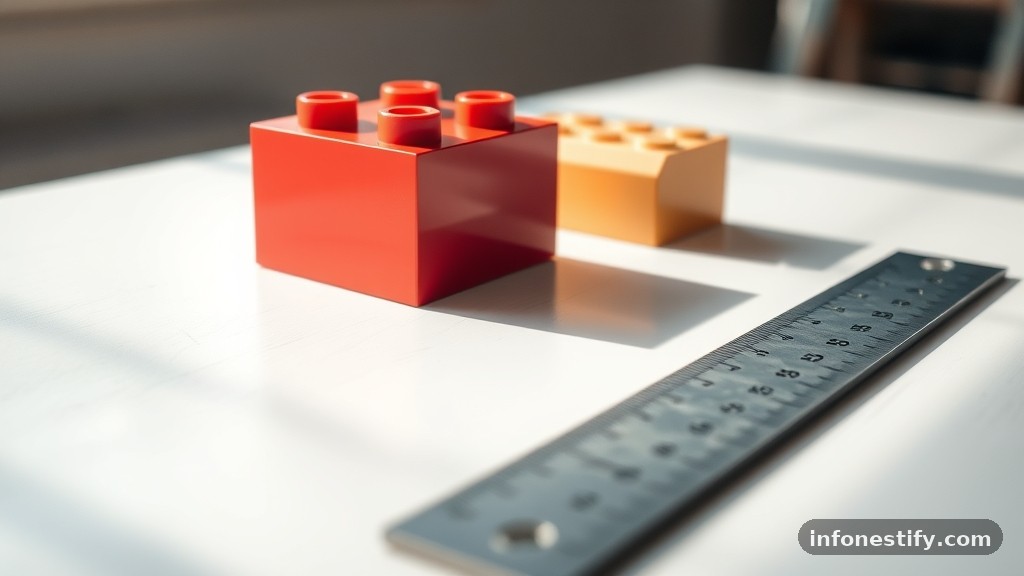
If you have children or are a fan of model building, you are likely surrounded by small plastic building bricks. A standard, classic four-stud building brick is roughly 1.25 inches, but when you connect two of these pieces, or look at larger specialty pieces, you frequently encounter the two-inch dimension. Many “long” specialty bricks or bridge components are designed to be exactly two inches long to fit into standard building grids.
Using toy bricks as a measuring tool is surprisingly effective because they are designed with precision engineering to snap together perfectly. If you have a collection of these bricks, you can create a custom ruler of almost any length by snapping them together.
For a quick two-inch reference, simply find a piece or a combination of pieces that match the length. This is a great way to help children understand the concept of measurement, and it provides adults with an easy, tactile way to gauge dimensions in a fun and accessible manner.
The Practicality of Knowing Two-Inch Benchmarks
Understanding the dimensions of common items is about more than just trivia; it is about building a better sense of spatial awareness. When you know that an AA battery is two inches, you no longer need to rely on abstract numbers. You can look at a shelf and instantly know if it will accommodate your electronics. You can look at a screw and know if it is too long for a project. This skill reduces the need for constant trips to the toolbox and makes daily tasks more efficient.
Furthermore, these benchmarks act as a mental map of your environment. Once you start noticing these items, you will find that you can estimate the size of almost anything in your home with a higher degree of accuracy.
Whether it is the width of a window frame, the thickness of a book, or the depth of a drawer, having a mental rolodex of two-inch objects allows you to “measure” the world around you in real-time. It turns every room in your house into a potential workspace where you can verify dimensions instantly.
How to Use These Benchmarks for Accurate Estimation
To get the most out of these common objects, it helps to keep a few “reference” items in a consistent location. For example, keeping a jumbo paperclip in your workspace or a spare AA battery in your junk drawer ensures that you always have a tool when you need it. When you are using these objects to measure, try to align the edge of the object with the start of the area you are measuring. If the space is slightly larger than your two-inch reference item, you know you have at least two inches of clearance, which is often the most important information to have.
It is also useful to remember that while these objects are generally two inches, they are not precision laboratory tools. If you are working on a project that requires extreme accuracy, such as electrical wiring or precision manufacturing, you should always defer to a calibrated ruler or caliper.
However, for 95% of household tasks—hanging pictures, checking clearance, or organizing storage—these common items are more than sufficient. By relying on these everyday objects, you become more self-sufficient and capable of handling small, unexpected measurement needs without cluttering your space with extra tools.
Comparing Two Inches to Other Measurement Units
It is helpful to place the two-inch measurement in the context of other common scales. Two inches is equivalent to approximately 5.08 centimeters. For those who work in both imperial and metric systems, remembering this conversion can be very useful. If you are looking at a product description that lists 50 millimeters, you are looking at something just a hair shorter than two inches. This dual-system awareness makes it easier to navigate international standards and modern product dimensions.
When comparing two inches to other common lengths, consider that it is roughly one-sixth of a foot. It is also about the width of a standard smartphone screen, depending on the model. By anchoring the two-inch measurement to these other units, you develop a more robust understanding of scale.
Whether you are using inches or centimeters, the goal is to create a reliable mental model that allows you to assess your surroundings quickly and confidently. This is a subtle but powerful way to improve your interaction with the physical world, making you more observant and more prepared for any project that comes your way.
The Importance of Consistency in Consumer Goods
The reason we are able to rely on these common items for measurement is due to the rigorous standards of modern manufacturing. Whether it is the length of a battery or the size of a paperclip, companies invest heavily in ensuring their products meet specific dimensions. This consistency is what allows our world to function seamlessly; it is why a battery bought in one country fits into a device made in another. When we repurpose these items as measuring tools, we are essentially leveraging the precision of global manufacturing standards.
This consistency also highlights the benefits of standardization in our daily lives. Without it, we would have no way to predict the size of everyday objects, leading to constant frustration and incompatibility.
As you identify more of these two-inch items in your own life, you will begin to appreciate the silent work of industrial designers who prioritize uniformity. This awareness can also make you a more informed consumer, as you begin to notice the subtle differences between “standard” items and “economy” or “specialty” versions that may not adhere to the same sizing conventions.
Why Visualizing Size Matters for DIY Success
Many DIY projects fail or become difficult because the builder did not have an accurate sense of the scale of the materials they were using. By having a mental reference for two inches, you can avoid common pitfalls, such as buying screws that are too long for a board or purchasing hardware that won’t fit into a pre-drilled hole. This level of spatial awareness is a hallmark of an experienced maker.
When you can “see” two inches in your mind’s eye, you can plan your projects more effectively. You can sketch out your ideas with a better understanding of how they will look and function in the real world. This mental preparation is a key step in any successful project, from simple home repairs to complex furniture assembly.
By training yourself to recognize these benchmarks, you are effectively sharpening your senses and becoming a more capable and confident individual in your own home. It is a simple habit, but one that provides significant long-term value.
Troubleshooting Measurement Discrepancies
While these items are generally reliable, it is important to exercise a little common sense. If you are using a paperclip, ensure it is not bent or distorted, as this can affect its length. If you are using a battery, make sure it is a standard AA and not an AAA or a specialty size, as these will obviously result in an incorrect measurement. Additionally, if you are using coins, be aware that stacking them or placing them on an uneven surface can introduce small errors.
Always consider the context of your measurement. If you are measuring something soft, like fabric or foam, remember that your reference object might press into the material, potentially giving you an inaccurate reading.
In these cases, it is often better to use a rigid reference object and hold it slightly above the surface to avoid distortion. By being mindful of these small factors, you can use these common household items to achieve surprisingly high levels of accuracy, proving that you don’t always need specialized tools to solve everyday problems.
Integrating Measurement Habits into Daily Life
Ultimately, the goal of identifying two-inch objects is to make your life easier and more efficient. By integrating these habits into your daily routine, you become more observant of the world around you. You start to see objects not just as things to be used, but as tools that can help you interact with your environment. This shift in perspective can be incredibly rewarding, turning simple, mundane objects into reliable helpers.
Whether you are organizing your workspace, working on a craft project, or just trying to figure out if that new gadget will fit on your desk, these benchmarks are there to assist you. Start by identifying three or four of these items that you interact with most frequently—perhaps a battery, a paperclip, and a school eraser.
Keep them in mind, and the next time you find yourself wondering about a measurement, put your knowledge to the test. You will likely find that you are much more capable of gauging size than you previously thought, and you will have a new, practical toolset at your disposal for whatever tasks come your way.

Camila Coelho is a passionate fashion and beauty enthusiast at Infonestify, where she shares her love for style, elegance, and creativity. With years of experience in the fashion and nail industry, Camila believes that beauty is a reflection of individuality and confidence.
Through her articles, she guides readers to discover their personal style, embrace trends that suit them best, and explore the artistry of nail design. From timeless wardrobe tips to modern manicure ideas, her content is crafted to inspire and empower readers to feel beautiful every day.
At Infonestify, Camila brings a fresh and relatable voice to the world of fashion and nails — blending expertise with inspiration. Whether you’re searching for the latest outfit ideas or nail art trends, her insights make beauty feel effortless, authentic, and achievable.
Stay inspired with Camila’s world of fashion and nails.