Visualizing dimensions without a dedicated measuring tool can be a surprisingly difficult task for most people. When you need to estimate a foot of length on the fly, having a mental database of common objects that measure exactly 12 inches can save you from a lot of guesswork. Whether you are arranging furniture, hanging wall art, or trying to understand the scale of a product you are buying online, knowing how to identify this specific measurement in your immediate environment is a highly practical skill.
Understanding the Standard Foot Measurement
Before diving into specific items, it is helpful to ground ourselves in what a foot actually represents in our daily lives. In the imperial system, 12 inches make up exactly one foot. This measurement serves as the foundational standard for everything from construction and architecture to everyday consumer goods. Because we encounter the concept of a “foot” so frequently, it has become a mental benchmark for distance.
When you look at a standard ruler, you are seeing the most precise representation of this length. However, rulers are not always available when you are in the middle of a project or a shopping trip. Understanding that 12 inches is the equivalent of 30.48 centimeters provides an additional layer of clarity for those who might transition between metric and imperial systems.
If you want to dive deeper into the historical and scientific standardization of these units, you can check the National Institute of Standards and Technology for precise definitions of these measurements. By internalizing the scale of 12 inches, you gain a better sense of spatial awareness that applies to everything from home decor to grocery shopping.
The Standard Sub-Compact Keyboard
One of the most ubiquitous items that clocks in at roughly 12 inches is the width of a standard laptop keyboard or a compact external keyboard. If you look at a typical 13-inch or 14-inch laptop, the keyboard tray is almost always designed to be about a foot wide. This is a result of ergonomic engineering; engineers discovered long ago that this width provides the most comfortable hand placement for the average adult.
Because we use these devices every single day, the physical width of a keyboard is an excellent “internal ruler” for many people. If you find yourself needing to estimate a foot, simply visualize your own laptop.
If you are a remote worker or a student, you likely have this tactile reference point sitting in front of you for several hours a day. The keys themselves are spaced to fit within this 12-inch footprint, providing a consistent, reliable frame of reference that you can use to estimate other objects in your office or workspace.
A Standard 12-Inch Pizza
The “personal” or “small” pizza is perhaps the most famous example of this length in the culinary world. When a menu lists a 12-inch pizza, it is referring to the diameter of the pie. While pizza crusts can vary slightly depending on how they are stretched or baked, the standardized baking pans used by almost every chain and local pizzeria are exactly 12 inches across.
This is a fantastic real-world reference because it is a circular measurement that helps you understand scale in two dimensions. If you have ever ordered a pizza and felt it was “just the right size” for a certain occasion, you now know that you are effectively dealing with a one-foot diameter.
Whenever you are in a kitchen or a restaurant, this culinary standard serves as a reliable mental anchor. The consistency of pizza pan sizes across the globe ensures that this specific measurement remains a universal reference point for almost everyone.
The Length of a Standard Ruler
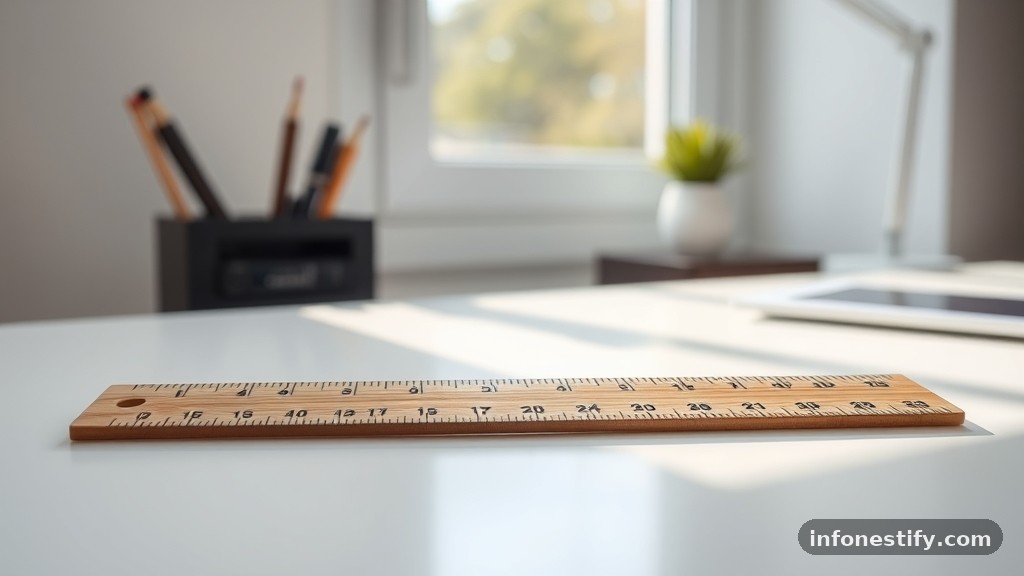
It might seem obvious, but the most accurate way to conceptualize 12 inches is to look at the tool designed to define it. A standard school or office ruler is exactly 12 inches long. These tools are manufactured with extreme precision to ensure that architects, engineers, and students can rely on them for accurate drafting and measurement.
Because these rulers are so common in classrooms and households, they are the primary reference point from which all other 12-inch items are judged. If you are struggling to visualize the length, think back to your grade school days. The wooden or plastic ruler you used to draw straight lines is the literal definition of the size we are discussing.
Having one of these in a junk drawer is the easiest way to verify any other object you suspect might be a foot long. It is the gold standard for measurement verification in any home environment.
Read More: How Tall is 40 Inches? Example with 12 Common Things | 40 Inches Big
The Standard Legal Document Width
While most people think of paper as 8.5 by 11 inches (the standard “letter” size), legal-sized paper is a different story. Legal paper measures 8.5 by 14 inches, but the width of many office filing systems and document holders is designed to accommodate various formats. More importantly, the vertical height of a standard hanging file folder is often very close to 12 inches.
When you are looking at a standard filing cabinet, the depth and the width of the folders are usually calibrated based on these common paper sizes. If you are organizing your home office, you will notice that the physical space taken up by a row of files is often defined by these increments. Understanding the dimensions of office supplies is helpful for anyone trying to maximize storage space, as shelves and cabinets are almost always built with these standard 12-inch, 24-inch, or 36-inch constraints in mind.
Large Floor Tiles
If you walk into a modern kitchen or bathroom, there is a high probability that the floor is covered in 12-inch by 12-inch ceramic or porcelain tiles. This is one of the most popular sizes for home improvement projects because it makes calculating the square footage of a room incredibly easy. If you have a room that is 10 tiles wide and 10 tiles long, you know instantly that you are looking at a 10-foot by 10-foot room.
This is a brilliant way to measure a space without any tools at all. Simply count the tiles on the floor. Because each tile is exactly a foot long, they serve as a built-in grid for your house.
This makes it simple to judge the size of furniture before you buy it. If you are wondering if a new armchair will fit in a specific corner, just count the tiles. This practical application turns your floor into a giant measuring tape, allowing you to make informed decisions about home layout and interior design.
A Standard Submarine Sandwich
In the world of fast food, the “footlong” sandwich is an iconic measurement. While the actual length of these sandwiches can sometimes vary slightly due to the artisanal nature of baking bread, the industry standard is to aim for exactly 12 inches. This has become a cultural touchstone that helps people visualize the length of a foot in a way that is very different from a ruler.
When you hold a sub sandwich of this size, you get a sense of the weight and the span of the length. It is a tangible, heavy, and familiar object that reinforces the concept of 12 inches.
Because so many people have purchased or eaten these sandwiches, the term “footlong” has entered the vernacular as a synonym for 12 inches. It is a classic example of how branding and food culture can help cement a unit of measurement in the public consciousness, making it easier for people to estimate lengths in everyday life.
The Height of a Standard Kitchen Counter
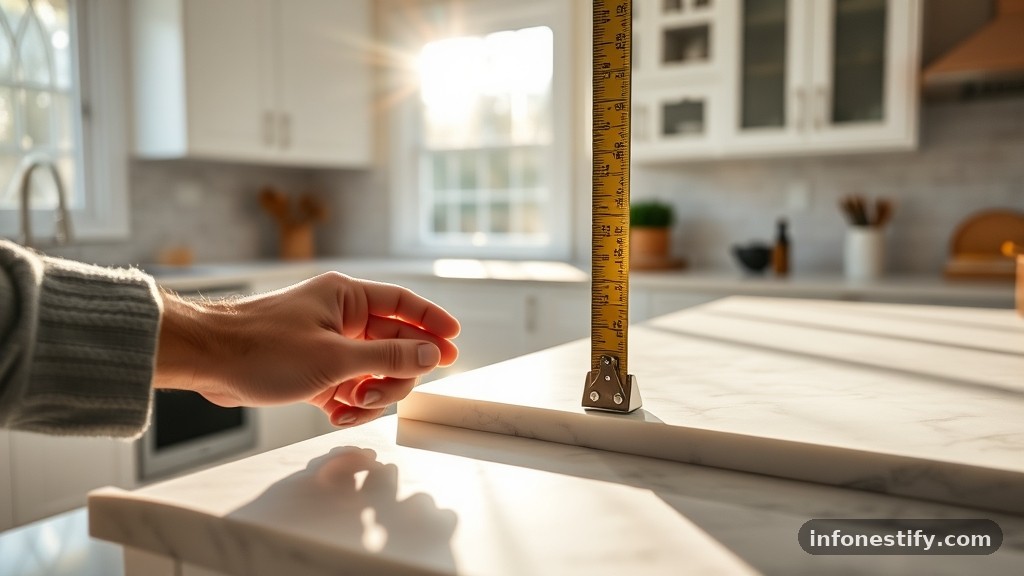
Have you ever noticed that most kitchen counters are at a height that feels universally comfortable? That is because they are designed to a standard height of 36 inches, or exactly three feet. When you look at the lower cabinets below the counter, they are often divided into sections, and the depth of the cabinet space is frequently around 12 to 24 inches.
While the counter is 36 inches high, the distance from the floor to the first shelf, or the width of a standard cabinet door, often aligns with 12-inch increments. By understanding these construction standards, you can quickly estimate the size of other objects in your kitchen. If you are looking at a stack of plates or a specific appliance, comparing it to the height of your counter or the width of your cabinet door can give you a very accurate estimate of how many inches you are dealing with.
Large Format Vinyl Records
For music lovers and collectors, the 12-inch vinyl record is a piece of history. The standard “Long Play” (LP) record has a diameter of exactly 12 inches. This format has been the standard for music albums for decades, and while it has seen a resurgence in popularity, its physical dimensions remain a perfect reference for anyone trying to visualize a foot.
If you have a collection of records, you have a ready-made measuring tool sitting on your shelf. Each sleeve is slightly larger than the record itself to accommodate the disc, but the record inside is a perfect 12-inch circle.
This is a great way to verify the size of objects like picture frames or circular wall decor. If you are looking for a frame for a piece of art, knowing that it fits a standard LP record gives you a very clear sense of the space it will occupy on your wall.
Standard Ruler-Sized Picture Frames
When you go to a store to buy frames, you will notice that 12 inches is one of the most common dimensions for square frames. Whether it is a 12×12 collage frame or a 12×16 document frame, this size is a staple of the home decor industry. Because of this, many people have 12-inch squares hanging on their walls as part of gallery displays.
If you are trying to estimate if a space is 12 inches wide, look at your wall art. If you have a photo frame that is a square, it is very likely to be a 12-inch frame.
This makes it incredibly easy to judge whether a new piece of art or a decorative item will fit in a specific gap on your shelf or wall. By using the objects already present in your home, you turn your living space into a functional reference guide that helps you navigate spatial decisions with confidence.
The Length of a Standard Adult Forearm
Human anatomy can sometimes provide a surprisingly accurate, if slightly variable, measurement tool. For many adults, the distance from the inside of the elbow to the tips of the fingers is roughly 12 to 14 inches. While this is not an “exact” scientific standard because every person’s body is different, it is a very common “rule of thumb” used by people who need a quick estimation tool in a pinch.
If you find yourself in the woods, at a construction site, or simply away from your tools, you can use your own arm to get a ballpark figure. By holding your arm up against an object, you can get a fairly good idea of whether it meets that one-foot benchmark.
This is a classic example of the “body-based” measurements that humans have used for thousands of years before rulers were mass-produced. While it shouldn’t be used for building a house, it is perfect for estimating the size of a box or a piece of furniture while shopping.
Standardized Large Pizza Boxes
Just as the pizza itself is 12 inches, the box it comes in is usually slightly larger to accommodate the crust and the ease of removal. However, the internal footprint of a standard 12-inch pizza box is a very reliable 12-inch square. If you have ever ordered delivery, you know exactly what this size feels like to carry.
The box is a very stable, flat surface, which makes it an excellent tool for measuring other items. If you are trying to see if a table can accommodate a specific item, or if a shelf is wide enough for a certain box, you can use the pizza box as a template.
It is a sturdy, common object that most of us have interacted with, and its dimensions are ingrained in our collective experience. This makes it a highly effective, albeit informal, tool for spatial estimation.
The Height of a Standard Two-Liter Soda Bottle
When you look at a two-liter bottle of soda, the height is often in the neighborhood of 12 to 13 inches. While this can vary slightly based on the brand and the design of the bottle, it is a very close approximation of a foot. If you are in a grocery store and need to estimate a distance, holding up a bottle of soda can give you a quick visual check.
This is particularly useful when you are trying to decide if an object will fit under a shelf or inside a cabinet. The vertical height of the bottle is a familiar sight, and because these bottles are ubiquitous, they serve as a reliable reference point. Many people don’t think of soda bottles as measuring tools, but in a world where we are constantly surrounded by standardized packaging, these items become natural markers for length and height.
Standardized Computer Mouse Pads
While gaming mouse pads have become much larger in recent years, a standard, traditional office mouse pad is often around 8 to 9 inches wide, but larger “extended” versions or square professional pads often hit the 12-inch mark. If you look at your desk setup, you might find that your mouse pad is exactly a foot wide, especially if you have a wide-format pad designed for both your mouse and keyboard.
This is another example of a workspace object that you interact with daily. By knowing the size of your mouse pad, you can quickly estimate the width of your desk, the space taken up by your monitor stand, or the distance between your devices.
It is these small, everyday items that provide the most utility when you need to make a quick spatial judgment. By being aware of the dimensions of the objects you use most, you become much better at navigating your environment without needing a tape measure for every little task.
Practical Tips for Estimating Without Tools
The most important takeaway from this guide is that you are likely surrounded by 12-inch objects at all times. Whether it is the tile on your floor, the keyboard under your fingers, or the picture frame on your wall, these items act as permanent, reliable benchmarks. The secret to estimating length is to identify a few of these “anchor objects” in your home or office and commit their size to memory.
When you need to measure something, compare it to your chosen anchor. If you know that your laptop keyboard is 12 inches, you can easily tell if an object is larger or smaller than that. If you know your floor tiles are 12 inches, you can easily estimate the size of a room.
Over time, this becomes second nature. You will find that you no longer need to scramble for a ruler because your mental map of the world has become calibrated to the foot.
This skill is not just for convenience; it is about spatial literacy. Being able to visualize dimensions allows you to shop smarter, organize better, and understand the scale of the world around you.
By paying attention to the common things that are 12 inches long, you turn your entire life into a laboratory for measurement. You will find that the more you practice this, the more accurate your estimations become, eventually reaching a point where you can “eyeball” a foot with surprising precision.
Final Reflections on the Foot Measurement
The foot remains one of the most important units of measurement in the English-speaking world. Despite the push toward the metric system, the 12-inch standard is embedded in our architecture, our consumer goods, and our daily habits. By recognizing the 14 objects listed in this guide—and identifying others in your own life—you can master the art of estimation.
Remember that while these objects are generally 12 inches, there is always room for slight variation in manufacturing. If you are doing precision work, such as carpentry or engineering, always defer to a certified tape measure or ruler.
However, for the vast majority of everyday tasks, these mental benchmarks will serve you perfectly well. Keep an eye out for these items in your daily routine, and you will soon find that you have a much stronger grasp on the physical dimensions of your world.
Whether you are measuring for a new bookshelf, checking the size of a pizza, or just satisfying your curiosity, the ability to visualize a foot is a powerful tool. It simplifies your decision-making and gives you a sense of control over your environment. The next time you find yourself wondering how long a foot really is, look around—you are likely already looking at several things that can tell you exactly what you need to know.

Camila Coelho is a passionate fashion and beauty enthusiast at Infonestify, where she shares her love for style, elegance, and creativity. With years of experience in the fashion and nail industry, Camila believes that beauty is a reflection of individuality and confidence.
Through her articles, she guides readers to discover their personal style, embrace trends that suit them best, and explore the artistry of nail design. From timeless wardrobe tips to modern manicure ideas, her content is crafted to inspire and empower readers to feel beautiful every day.
At Infonestify, Camila brings a fresh and relatable voice to the world of fashion and nails — blending expertise with inspiration. Whether you’re searching for the latest outfit ideas or nail art trends, her insights make beauty feel effortless, authentic, and achievable.
Stay inspired with Camila’s world of fashion and nails.